










What to Do After Anal Sex: Aftercare, Cleanup, and What’s Normal
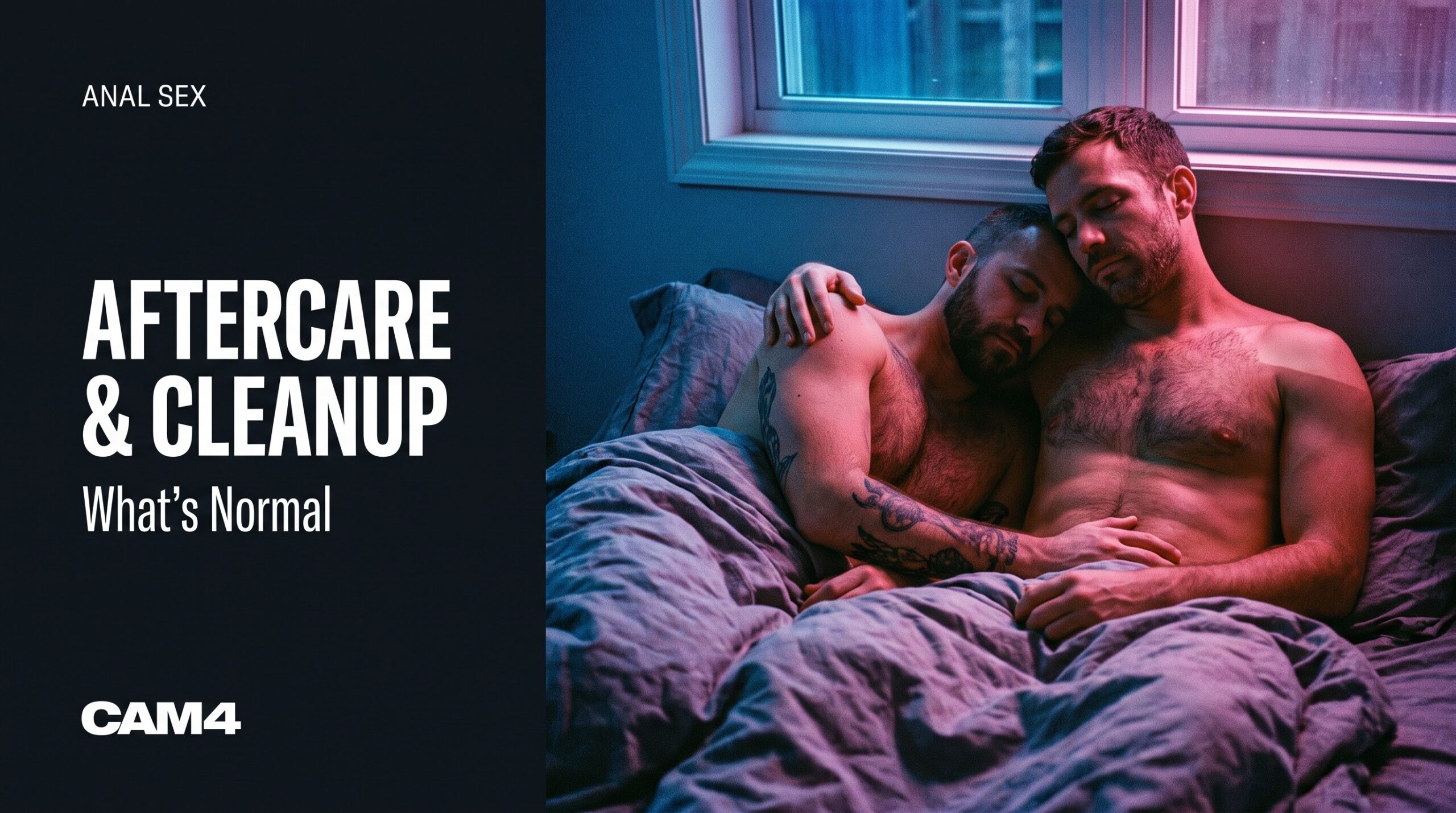
Every guide covers the before and during. Almost none covers the after — which is a shame, because knowing what’s normal afterward removes a lot of unnecessary worry.
The hours after anal are where most people’s questions actually live. Is this normal? Should it feel like this? Was that supposed to happen? Here’s the practical version: what to do, what to expect physically and emotionally, and where the line sits between “completely normal” and “worth a doctor’s visit.”
Whether you’re new to anal or returning to it after a while, the experience is better when you know what to expect on both sides of it. If you’re a performer, this is the kind of post-scene routine that CAM4’s most experienced broadcasters treat as standard — and it applies just as well at home. You can explore anal cam content on CAM4 or see performers who specialise in pegging and anal play if you want a better sense of how experienced people approach this.
The immediate cleanup
Nothing complicated. Wash the external area gently with warm water and mild soap — gentle is the operative word, since the tissue has just been through something and aggressive scrubbing only irritates it. Skip harsh soaps and don’t douche afterward; there’s no need, and it tends to make things more irritated rather than cleaner.
If toys were involved, clean them properly before they go away — warm water and an appropriate toy cleaner, following whatever the material calls for. Performers who use sex toys in their shows follow the same rule: material-appropriate cleaning, every time. Wash your hands. If you’re moving on to anything else, particularly anything vaginal, change condoms and clean up thoroughly first, because transferring bacteria is a real infection route.
Then give yourself a bit of time. A lot of people feel some mild soreness or a sense of fullness afterward, and rushing straight into the rest of your day tends to make you notice it more.
What’s actually normal afterward
- Mild soreness or tenderness for a few hours, sometimes into the next day.
- A feeling of fullness or looseness that settles fairly quickly. The muscles are elastic; they return.
- Needing the bathroom soon after, or feeling like you might. Very common and not a sign anything went wrong.
- A tiny amount of spotting on one occasion, particularly if things were a bit rushed — usually a small tear that heals on its own.
- Feeling a bit emotionally wrung out, which we’ll come to.
None of that means anything has gone wrong. Bodies respond to novel sensation, and most of these fade within a day.
The mess and smell question, answered honestly
Since people are too embarrassed to ask: yes, sometimes there’s a bit of mess, and no, it usually isn’t the catastrophe the anxiety predicts. With basic preparation, most encounters are far less dramatic than people fear — a bit of residue at most, easily cleaned. Occasionally there’s more. That’s a normal bodily reality rather than a personal failure, and the couples who handle it best are the ones who’ve agreed in advance that it’s not a big deal.
On smell: mild odour is normal and expected — you were in that part of the body. It’s not a sign of poor hygiene or that something’s wrong. What isn’t normal is a strong, foul, or unusual smell that persists, particularly alongside discharge or pain, which can indicate an infection and is worth getting checked.
The genuinely useful reframe: the anxiety about mess is almost always bigger than the mess. (The preparation and hygiene guide covers reducing it in advance.)
Emotional aftercare — the part nobody mentions
This gets left out of almost every how-to, and it matters. Anal can be an intense experience physically and emotionally — there’s vulnerability in it, and often a lot of trust — and it’s genuinely common to feel a bit fragile, tender, or oddly emotional afterward.
So don’t just roll over and check your phone. Stay close for a bit. Check in with each other — how are you feeling, was that okay, anything you’d change. Warmth, water, a blanket, some quiet connection. If you’re the receiving partner especially, being cared for afterward makes a real difference to how the whole experience lands.
This applies to couples too — couples on CAM4 who broadcast together consistently cite post-scene connection as part of what makes their content feel authentic. That’s not a performance note; it’s a relationship one. It costs five minutes and it’s often what people remember most warmly.
When to see a doctor
- Bleeding that’s more than a trace, that continues, or that recurs. Rectal bleeding should never be waved off as obviously nothing — other conditions look similar and need ruling out.
- Pain that persists beyond a day or two, or that’s severe rather than mild.
- Signs of infection — fever, unusual discharge, a foul persistent smell, increasing rather than decreasing discomfort.
- Ongoing difficulty controlling bowel movements, which is uncommon but warrants proper assessment.
- A lump, or anything that simply worries you.
None of these are reasons to panic; they’re reasons to get looked at rather than to google at 2am. And doctors have genuinely seen it all — being straightforward about what happened helps them help you. (The safety and health risks guide and hemorrhoids guide cover related concerns.)
Looking after yourself over the next day
If you’re a bit sore, be kind to the area: warm baths help, avoid straining on the toilet (fibre and water do more than you’d think), and give it a rest before going again. Repeated sessions on already-irritated tissue is how minor soreness becomes a fissure.
And if something didn’t go well — it hurt, it was messy, it was awkward — that’s information for next time rather than a verdict. More lube, slower, more prep. (The pain and discomfort guide troubleshoots.) For performers building a show around this category, the CAM4 broadcaster training hub covers how to structure shows across any niche, including anal and kink content.
Most of what happens after anal is normal and passes within a day: mild soreness, a bit of fullness, occasionally a small mess and a mild smell. Clean gently, don’t douche, look after each other emotionally as well as physically, and know the handful of symptoms — persistent bleeding, ongoing pain, signs of infection — that mean a doctor rather than a search bar. The after-part is simpler than the anxiety around it suggests. More posts on the CAM4 blog.
Related reading: anal sex prep and hygiene guide, anal sex safety and health risks, and how to have anal sex with a partner.
This is general education, not medical advice. Persistent or recurrent rectal bleeding, ongoing pain, signs of infection, or difficulty controlling bowel movements warrant medical evaluation — rectal bleeding should never be assumed benign without assessment. Clinician review recommended before publishing.